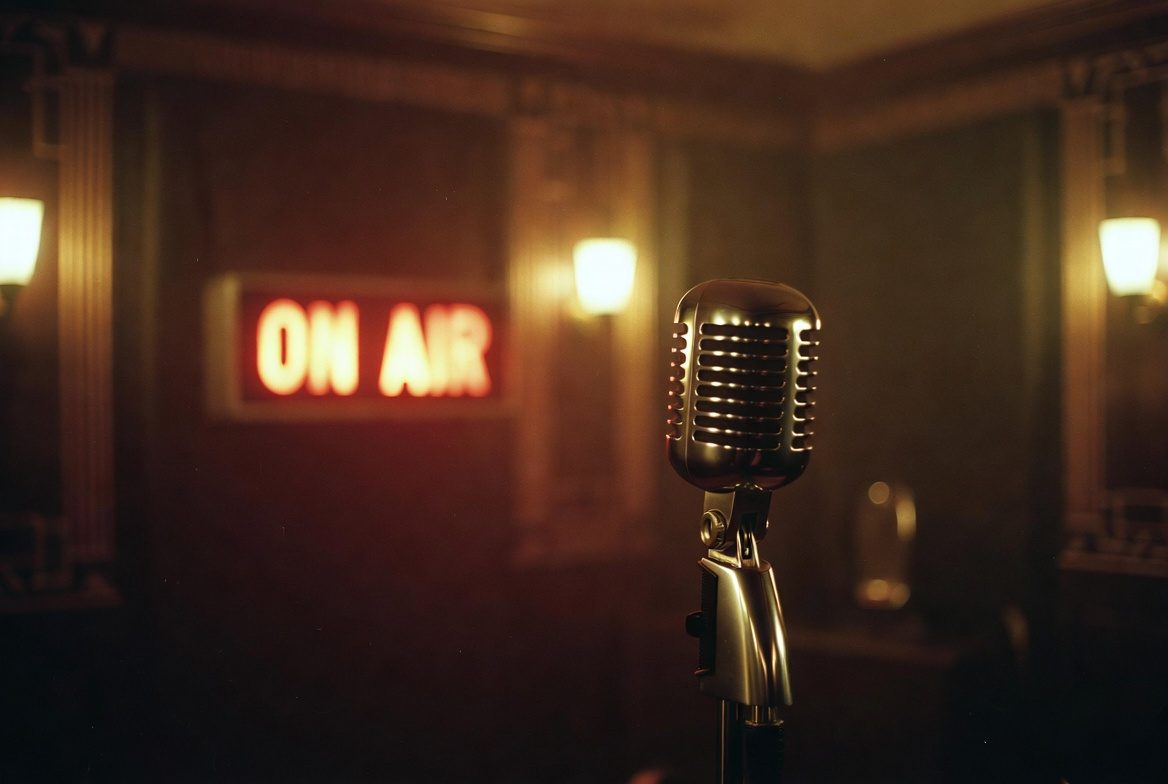
The history of comedy is really the history of comedians finding a new room every time the old one stopped telling the truth. The microphone is the prop, but the real story is the search for a stage where you could actually say the thing.
The footlights
It starts ancient — Aristophanes mocking generals to their faces, the masked fools of the commedia dell’arte improvising in Italian town squares. But the modern shape begins on the vaudeville circuit, where by the late 1800s comedy became a profession. You worked the bill between the acrobats and the dog act, you learned that timing is a craft, and you learned it in front of crowds that would absolutely let you know when you were dying.
The voice in the living room
Then radio carried comedy indoors. Suddenly the laugh you couldn’t see — built entirely on writing, voice, and rhythm — became a national weekly habit. The sitcom and the variety show were born in front of a microphone nobody in the audience could see. Comedy became something families scheduled their evenings around.
The golden age, and the sick comics
Television made comedians into faces. The live sketch show and the situation comedy turned into genuine American art forms. But the more interesting thing was happening in the nightclubs, where a generation of so-called “sick comics” started saying what TV wouldn’t — the first real stand-up, the first time the room itself became the point.
Every era found a new room. The mic just followed the truth around.
The brick wall
In the 1970s stand-up grew up. The Comedy Store and The Improv became proving grounds; comics traded interchangeable one-liners for an actual point of view. The brick wall and the single mic became the most honest stage in America, and the comedy album turned comics into something like rock stars.
The boom and the special
Then Saturday Night Live rewired sketch, the 1980s boom put a club in every city, and cable discovered that the hour-long special — one comic, one stage, no network notes — was its killer app. Comedy was suddenly everywhere, which meant the next move was inevitable: a reaction.
Alt, and then no gatekeepers at all
The alternative scene took comedy into rooms above bars and broke the setup-punchline rules on purpose. And then the floor fell out from under the gatekeepers entirely. Podcasts gave comics their own networks. The clip became the new tight-five. Streaming bought specials by the dozen. Today a comic can build an audience from a bedroom mic and sell out a theater — which is, more or less, where this studio picks up the thread.
Seven rooms, one through-line. The mic kept moving because the truth kept needing somewhere new to live. We figured it should finally get a home.